The puppy days really are so much fun!
For both the little dog and the owner, everything is a fresh new experience, but just like us humans, puppies do grow up… That said, the joy of raising them doesn’t end when the puppy days are over. In fact, the love between you and your beloved dog only grows deeper with every extra year they spend by your side.
During the transition into adulthood, you might be wondering: when does my puppy need to start eating adult dog food? Let’s talk about the “Why”, the “When”, and the “How” of switching your puppy’s current puppy food over to adult dog food. Right now your puppy is probably full of energy and wants to play non-stop! That boundless energy will carry on into adulthood. But just like us humans, as they leave their “toddler and teenage years” behind and grow into adults, their metabolism naturally slows down a bit. This is exactly the main reason for switching your puppy’s food.

Why switch to adult dog food?
Because a puppy has a faster metabolism during its baby and teenage stages – along with the nutritional needs of growth – puppy food contains more calories, fat, protein and certain other nutrients compared with adult dog food. All of these nutrients are very important during the puppy stage. The right nutritional make-up helps your puppy grow up healthy and strong.
[If you’d like to learn more about comparing natural puppy foods, you can read: A comparison of popular natural dry puppy foods in Hong Kong]
However, for most adult dogs (non-stop, always-on-the-go dogs and pregnant or nursing dogs may be exceptions), puppy food provides a calorie density far higher than they actually need. So, unless you really cut down their food portions (which may leave them feeling hungry all the time), that is to say: if they carry on eating puppy food after reaching adulthood, your dog is very likely to become, well… a bit more round and roly-poly. (laughs)
Given the health risks that come with obesity – such as an increased risk of arthritis and joint/orthopaedic strain, diabetes, cancer and other health problems – it’s best to keep your grown-up puppy at a healthy weight right from the start.
When to switch to adult dog food?
When should a dog switch over to adult dog food? The simple answer is: when they stop growing rapidly.
So what does that actually mean… The more detailed answer may involve more factors: for example, not all dogs reach adulthood at the same age.
Every dog is unique, but on average, small and toy breeds mature faster (10-12 months old), while large breeds take longer to finish growing (up to 24 months for large breeds). In addition, once some dogs have been desexed, their metabolism may slow down earlier. Because of this, your vet may have you monitor your dog’s weight more closely after the operation, and may suggest you transition them from their current puppy food to adult dog food a bit earlier – especially if your puppy is already at the big-baby stage.
How do you switch food?
Of course, as we mentioned before, every dog is unique. The exact timing for switching food is best decided after discussing it with your vet.
How do you change your puppy’s food? The first thing you need to decide is which food to feed your puppy once they reach adulthood.
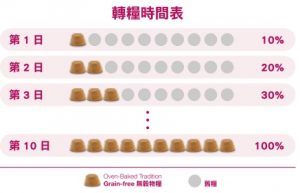
The most common starting point is the adult dog food from the same puppy food brand you’re currently feeding, assuming your puppy likes this food and is doing well on it (full of energy, sleeping well, and nice stools too). If you’re transitioning from one product (taking the Gold Puppy puppy food from the Fromm brand as an example) to another product from the same brand, such as Gold Puppy to Gold Adult, a transition period isn’t strictly necessary, but we encourage it. Doing so means the change won’t feel so drastic during the transition, and it’s less likely to upset your puppy’s tummy. Take it slow… (take your time…)
That said, any change in food can cause an upset stomach or diarrhoea. This is because the digestive tract needs time to adjust to something new, especially if your puppy has a sensitive stomach. Making the change slowly and gradually will help prevent these symptoms. If your dog is a fussy eater, a slow change will also make it easier for your dog to accept the new food.
Here are two methods you can refer to:
One: the mixing method
Mix the puppy food together with the new adult dog food, starting with a smaller portion (start with the adult dog food making up 25%). This works out to about 1 part new adult dog food mixed into every 3 parts puppy food.
After a few days, switch to a 50:50 mix: half puppy food, half adult dog food.
After a few more days, switch to 75% adult dog food and 25% puppy food (three parts adult to one part puppy).
After a few more days, switch to 100% adult dog food.
Two: the two-bowl method
Place a bowl with a small amount of the new adult dog food next to your puppy’s regular food bowl (which still contains the puppy food they’re used to). Let your puppy warm up and start nibbling on the new adult dog food. Carry on like this for a few days, gradually adding more adult food (and reducing the amount of puppy food accordingly). After a few days to two weeks, start taking away the puppy food, so that your dog is only eating the adult food.
Some dogs do better with one method than the other, so if one method isn’t working well, try the other. If needed, you can also try adult dog foods of different flavours and textures until you find something your puppy really loves. Just don’t let them pick and choose between too many different kinds of food – otherwise they may grow up to be a very fussy eater – and then you might end up with a bit of a headache (laughing again). You can just imagine, if a fussy dog needs to switch food in future, the whole project could keep you up at night… Then again, most puppies switch over to adult dog food just fine, so no need to worry too much!
You’ll be giving your puppy all the nutrients – and all the love – they need to stay healthy and playful into adulthood.
Please do enjoy every unforgettable moment with your dog!