Quick answer: When choosing a dog lead for your dog, the correct order is “look at walking behaviour first → then body size and measurements → and only pick the style and colour last”. Before buying a dog lead, you must grasp these 5 key points:
- Tell the four main types apart: the collar (for everyday tag-wearing), the half-check chain (limited correction), the harness (the mainstay for walks) and the lead (the connecting tool) — the four play different roles and cannot replace one another.
- Match to walking behaviour: for dogs that don’t pull, use an H-harness or step-in harness; for easily distracted dogs, use a half-check collar; for dogs that lunge forward often, use a front-clip (two-point) harness.
- Measure the size, don’t guess it: measure the neck for a collar and the chest girth for a harness (the widest point just behind the front legs); once fastened, you must be able to slip two fingers in easily.
- Materials and hardware must resist damp: Hong Kong summers are humid and rainy and many owners head to the seaside, so choose waterproof nylon webbing with rust-resistant alloy buckles, and make sure it has reflective stitching.
- Lead length must be legal: under Hong Kong law, in public places (country parks excepted) dogs weighing 20 kg or more must be led on a lead no longer than 2 metres.
The safest combination for beginners is: one SR side-release collar (for everyday tag-wearing) + one H-harness or step-in harness (for walks) + one 1.4–1.8 m fixed-length lead. Among the ROGZ range sold at BC Pets, the matching styles are the ROGZ SR Collar ($54–$184), the ROGZ H-Harness ($108–$216) / ROGZ Step-in Harness ($108–$216), and the ROGZ Fixed-Lead ($64–$120). If you have a lunging problem, we suggest going straight for the ROGZ Explore Harness two-point H-harness ($420–$630).
Key takeaways (TL;DR):
- A collar is not walking gear: a collar’s main job is to hold the dog tag and provide identification; walking a dog on a collar with constant pulling over the long term concentrates all the force on the neck and windpipe, risking injury.
- The harness is the mainstay for walks: a harness spreads the force from the neck across the chest and back, and is the right choice for the vast majority of Hong Kong family dogs.
- For lunging, change the direction of force, not the amount of force: a front-clip / two-point design turns the dog’s forward lunge into a sideways turn, which is more effective and safer than simply using a tighter neck chain.
- The two-finger rule is the only universal standard: ROGZ officially recommends that, once fastened, you should be able to slip two fingers steadily between the lead and the skin — too loose and it slips off, too tight and it chafes the coat.
- 20 kg is Hong Kong’s legal dividing line: in public places, dogs weighing 20 kg or more must use a lead no longer than 2 metres; fighting dogs and known dangerous dogs must wear a muzzle and use a lead no longer than 1.5 metres.
- Puppies need room to grow, but don’t buy a size up: the right approach is to buy the size that fits now and replace it as the puppy grows, rather than buying a larger size to “leave room”.
Introduction: choosing the wrong dog lead isn’t just a waste of money
When many Hong Kong owners buy a dog lead for the first time, they either grab whatever colour looks nice in the pet shop, or assume that “suitable for large dogs” means it fits. The three most common outcomes are: the dog coughs non-stop on walks (the collar presses on the windpipe), the whole thing slips off after a few struggles (the size is too loose), or they get it home only to find it won’t fasten at all (the chest girth was mismeasured).
A dog lead is actually not just a matter of comfort — it is a legal responsibility too. Under Section 23 of the Rabies Ordinance (Cap. 421 of the Laws of Hong Kong), a keeper of a dog in a public place must lead it on a lead or otherwise keep it under proper control, and offenders may be fined HK$10,000. The Agriculture, Fisheries and Conservation Department (AFCD) also states clearly that, in public places (country parks excepted), dogs weighing 20 kg or more must be securely led on a lead no longer than 2 metres. In other words, choosing a dog lead is not purely a matter of aesthetics, but something governed by clear standards.
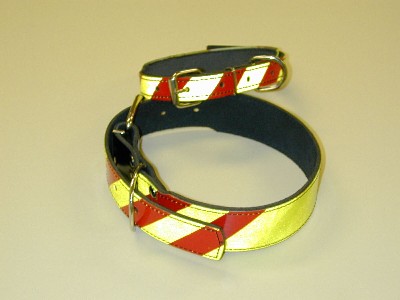
BC Pets Pet Supplies Centre has been in pet-supplies retail in Hong Kong since 2009, with its shop in Fanling, and over the years has fitted leads for dogs of every size and temperament. This guide won’t tell you to “buy the most expensive one”; instead it breaks the buying process into 5 actionable steps, complete with measuring methods, Hong Kong’s legal thresholds and ROGZ’s official sizing data, so you get it right the first time.
Point one: first tell the four main types apart — don’t use a collar as a harness
What Hong Kong owners most often confuse is the roles of the “collar” and the “harness”. Put simply: the collar handles identification, the harness handles lead control, and the lead handles the connection. The three are complementary, not interchangeable.
| Type | Point of force | Main function | Advantages | Limitations | Best suited for |
|---|---|---|---|---|---|
| Side-release collar (SR Collar) | Neck | Holding the dog tag, identification, brief control | Lightweight, can be worn for long periods, easy to fasten and undo | When pulling, all the pressure is concentrated on the windpipe | Everyday wear for all dogs |
| Half-check collar (Half-Check) | Neck (limited tightening) | Correction, preventing the dog from backing out | Tightening has a limit; it won’t cinch indefinitely | Still applies force to the neck; not suitable for prolonged pulling | Dogs with a small head and thick neck that easily back out |
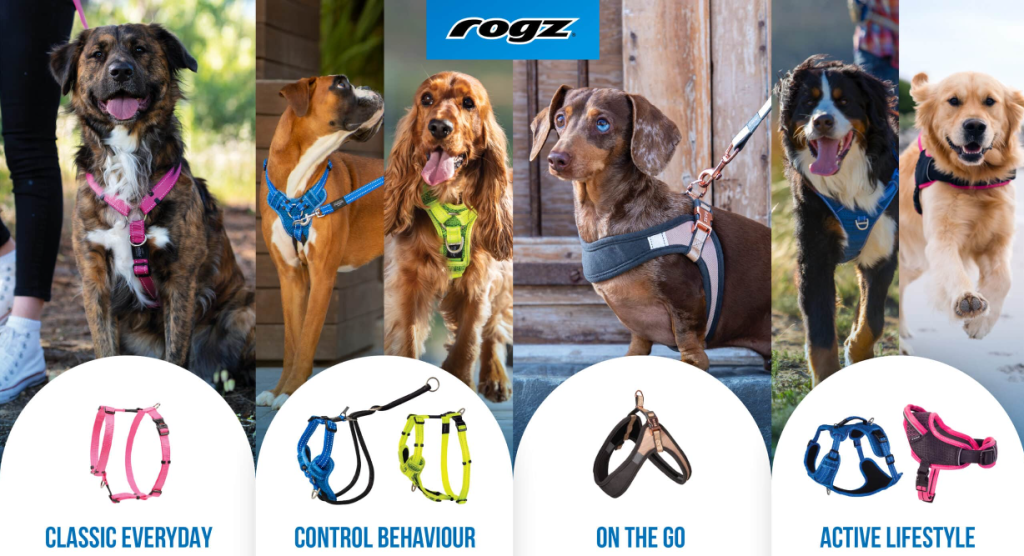
| H-harness (H-Harness) | Chest + back | Everyday walking and leading | Spreads the force, simple structure, breathable | Must be put on over the head; some dogs resist it at first | Dogs that don’t pull and have learned to walk on a loose lead |
| Step-in harness (Step-in) | Chest + back | Everyday walking and leading | Just step in — no need to go over the head — the easiest to put on | Slightly less supportive for dogs that twist and pull very hard | Dogs that dislike having things put over their head, small dogs, elderly dogs |
| Front-clip / two-point harness (Two-point) | Two points: front of the chest + back | Controlling lunging, improving behaviour | The front clip changes the direction of force, turning the lunge sideways | Higher priced, needs correct adjustment | Medium-to-large dogs that pull hard and are strong |
| Lead (Lead) | — | Connecting the person and the dog | Choice of length, elasticity and split styles | Does not itself provide body support | All dogs |
ROGZ states clearly on its FAQ page that dogs are best walked on a harness rather than a collar, because a harness transfers the restraint and pressure from the neck to the chest and back; walking a dog on an unsuitable collar may cause a choking sensation and even permanent damage to the dog’s windpipe.
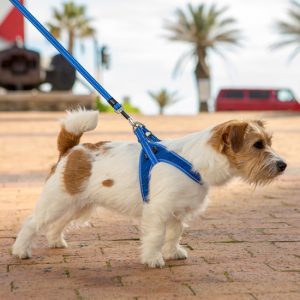
Tip: ROGZ also reminds owners that it does not recommend keeping a harness on the dog for long periods. The right approach is: wear a lightweight collar at home day to day (for the dog tag), and only put on or add the harness before heading out for a walk, taking it off once home. This both meets the law’s identification requirement and avoids long-term chafing and hair loss under the armpits.
Point two: match to the dog’s walking behaviour, not its breed
“A large dog needs a thick neck chain” is the most common wrong-headed thinking. What really decides which kind of dog lead you should buy is the dog’s actual behaviour on walks, not how heavy it is or what breed it is. The comparison table below is the method we use most often in our shop.
| Walking behaviour | Recommended type | How it works | Matching ROGZ model at BC Pets | Reference price |
|---|---|---|---|---|
| Walks on a loose lead, basically doesn’t pull | H-harness or step-in harness | Only needs basic connection and force distribution | ROGZ H-Harness / Step-in Harness | $108–$216 |
| Occasionally gets distracted and darts off to sniff, but can be pulled back | Half-check collar used together with a harness | The half-check gives an instant reminder while the harness bears the main force | ROGZ Half-Check chained collar | $76–$108 |
| Constantly lunges forward, the owner has to brace hard | Front-clip / two-point harness | The front clip makes the dog turn naturally as it lunges, cancelling out the lunge | ROGZ Explore Harness two-point H-harness | $420–$630 |
| Small head, thick neck — slips the lead the moment it ducks its head | A half-check collar or a harness with high coverage | When the half-check tightens it prevents the dog backing out and slipping free | ROGZ Half-Check chained collar | $76–$108 |
| Sudden stops or sudden starts injure the owner’s wrist | Bungee (shock-absorbing) lead | The elastic section absorbs sudden pulling force, protecting both person and dog | ROGZ Control Lead bungee lead | $238–$270 |
| Two dogs out together, leads getting tangled up | One-to-two splitter lead | Control two dogs one-handed, with less tangling | ROGZ Splitz one-to-two coupler | $86–$118 |
Tip: A lunging problem calls for “changing the direction of force”, not “changing the amount of force”. Many owners’ instinct is to switch to a thicker, tighter neck chain, but this only makes the dog pull harder against it, while increasing the risk of injury to the windpipe and neck vertebrae. The reason a front-clip design works is that the moment the dog lunges forward, the attachment point turns its body naturally to the side, physically cancelling out the lunge — it is a structural matter, not a matter of strength. A dog lead can only improve control; genuinely solving lunging still requires loose-lead walking training alongside it.
Point three: you must measure the size — the two-finger rule is the only universal standard
Sizing is where beginners most easily go wrong. ROGZ officially recommends using body weight as an initial guide, but the most accurate approach is still to measure in real life: for a collar, measure the neck circumference (the thickest part of the neck); for a harness, measure the chest girth (the widest loop around the ribcage, just behind the front legs).
Once measured, apply the two-finger rule: after fastening the lead, you should be able to lay two fingers flat between the lead and the skin — firm but not tight. If they won’t go in, it’s too tight and will chafe the coat or even affect breathing; if you can easily fit three or more fingers, it’s too loose and the dog can slip out when it struggles.
Below is ROGZ’s official published sizing data (in centimetres), which you can use directly to check against your measurements:
| ROGZ range | Measurement point | S | M | L | XL |
|---|---|---|---|---|---|
| Utility Classic Collar (matches the SR Collar) | Neck girth | 20–31 cm (11 mm wide) | 26–40 cm (16 mm) | 34–56 cm (20 mm) | 43–70 cm (25 mm) |
| Utility Control Collar Chain (matches the half-check chained collar) | Neck girth | 24–36 cm (11 mm) | 31–45 cm (16 mm) | 37–56 cm (20 mm) | 45–70 cm (25 mm) |
| Utility Classic Harness (matches the H-harness) | Chest girth | 23–37 cm (11 mm) | 32–52 cm (16 mm) | 45–75 cm (20 mm) | 60–100 cm (25 mm) |
| Utility Step-In Harness (matches the step-in harness) | Chest girth | 27–38 cm (11 mm) | 42–61 cm (16 mm) | 53–76 cm (20 mm) | 67–103 cm (25 mm) |
| Utility Explore Harness (matches the two-point harness) | Chest girth | 36–57 cm (16 mm) | 45–70 cm (20 mm) | 55–85 cm (20 mm) | 66–105 cm (25 mm) |
Note that the chest-girth range for the same size differs between the H-harness and the step-in harness: for example, the M H-harness fits 32–52 cm, while the M step-in harness fits 42–61 cm. So “my dog always wears an M” cannot be carried across styles — you must re-check the chart when switching styles.
Tip: If your measurement falls right on the overlapping boundary between two sizes, choose the larger one, because an adjustable strap can be taken in but not let out. Also, never “buy a puppy a size up to leave room” — a too-loose lead slips off very easily when a puppy struggles, and is one of the main causes of dogs going missing. The right approach is to buy the size that fits now; small dogs generally settle in size at around 8–12 months and large dogs at around 12–18 months, and only then should you switch to an adult size.
Point four: materials and hardware — Hong Kong’s humid, salt-water environment demands more
Hong Kong summers are hot and rainy, with humidity staying above 80% for long stretches, and many owners take their dogs to the seaside or hiking, so a lead’s materials and hardware fail more easily than in drier places. Below is a comparison of how three common materials actually perform.
| Material | Durability | Waterproof / quick-drying | Cleaning difficulty | Suitability for Hong Kong’s environment | Reference price range |
|---|---|---|---|---|---|
| Nylon webbing (Nylon Webbing) | High | Good — dries quickly after rinsing | Low — can be washed directly with water | Most suitable — doesn’t mould easily in humid weather | $54–$270 |
| Round rope (Rope) | High | Moderate — the core dries more slowly | Moderate | Suitable — comfortable to hold, but needs to be dried thoroughly | $130–$216 |
| Genuine leather | Medium-high | Poor — dislikes water and damp | High — needs regular care | Not recommended — moulds and stiffens easily in Hong Kong’s humidity | Depends on the brand |
On hardware, focus on three things: whether the buckles are rust-resistant alloy or high-strength plastic; whether the D-ring (the ring you clip the lead to) is fully welded rather than an open ring; and whether there is reflective stitching. ROGZ states that its products must pass magnetic-buckle tensile testing, component strength testing, webbing colour-fastness testing and sunlight fading and degradation testing; the Utility range also uses highly reflective stitching to improve day and night visibility.
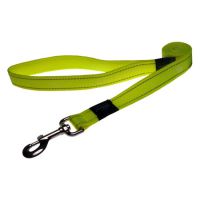
Tip: Hong Kong winters get dark early — it starts getting dark just after five — and many estate walkways and country paths are poorly lit. Reflective stitching isn’t a fancy touch but a genuine safety feature, especially when walking dark-coated dogs (Labradors, local mongrels, poodles). Also, after a trip to the beach or seaside, remember to rinse the lead and buckles with clean water; leftover salt is the number-one cause of hardware rusting and seizing up.
Point five: lead length and Hong Kong law — 20 kg is the key dividing line
In Hong Kong, lead length is not just a matter of convenience but a clear legal threshold. According to the AFCD: in public places (country parks excepted), dogs weighing 20 kg or more must be securely led on a lead no longer than 2 metres. And according to the AFCD’s guidance on fighting dogs and known dangerous dogs, fighting dogs and known dangerous dogs must, in public places, wear a muzzle and a specified collar at all times, and be securely led on a lead no longer than 1.5 metres.
| Dog’s circumstances | Legal maximum lead length | Other legal requirements | Recommended practical length |
|---|---|---|---|
| Under 20 kg, general dogs | No stated maximum length | Must be led on a lead or kept under proper control | 1.4–1.8 m |
| 20 kg or more (country parks excepted) | 2 m | Must be securely led | 1.2–1.8 m |
| Fighting dogs / known dangerous dogs | 1.5 m | Must wear a muzzle and a specified collar | 1.2–1.5 m |
For reference, ROGZ’s official length data: the Utility Classic Lead is 1.8 m in S, 1.4 m in M and L, and 1.2 m in XL; the Utility Multi Lead (multipurpose lead) is 2 m in S and 1.8 m in M/L/XL. As you can see, the thicker styles for large dogs are actually shorter, which conveniently matches the legal requirements.
Tip: Multipurpose leads and bungee leads can be adjusted for length; if your dog is 20 kg or more, you should adjust it to 2 m or less when used in public places. As for the retractable lead, although convenient, it is not recommended on Hong Kong’s crowded streets and in shopping malls: firstly, the length often exceeds the legal maximum; secondly, the cord is thin and hard to shorten instantly in an emergency; and thirdly, it easily tangles around passers-by or other dogs. Retractable leads are better suited to wide, uncrowded open country areas.
How to choose the ROGZ lead range? A comparison of all 14 styles at BC Pets
ROGZ is a pet-supplies brand from South Africa, known among Hong Kong owners as “good value, with durable buckles, bright colours and reflective lines”. It sits at a mid-range price point and is a common choice for a beginner’s first harness or collar. Below is a complete comparison of all 14 products currently in BC Pets’ ROGZ leads and accessories section.
| Product name | Type | Reference price (HK$) | Features | Best suited for |
|---|---|---|---|---|
| ROGZ SR Collar | Side-release collar | $54 – $184 | One-handed quick-release, holds the dog tag | Everyday wear for all dogs |
| ROGZ Half-Check chained collar (half-check) | Half-check collar | $76 – $108 | A safe design with a limit on how far it tightens | Dogs with a small head and thick neck that easily slip the lead |
| ROGZ H-Harness | H-harness | $108 – $216 | Simple structure, breathable, spreads the force | Well-behaved dogs that don’t pull |
| ROGZ Step-in Harness (step-in harness) | Step-in harness | $108 – $216 | Step in and clip — no need to go over the head | Dogs that dislike having things put over their head, small dogs, elderly dogs |
| ROGZ Fast-Fit Harness | Quick-release harness | $148 – $210 | Officially sized by body weight (1–14 kg) | Small-to-medium dogs, for quick on and off |
| ROGZ Explore Harness two-point H-harness | Front-and-back two-clip harness | $420 – $630 | Two attachment points, padded chest strap, controls lunging | Medium-to-large dogs that pull hard |
| ROGZ Fixed-Lead | Fixed-length lead | $64 – $120 | The most basic and practical, great value for money | All dogs — the top pick for a first lead |
| ROGZ Multipurpose Lead | Adjustable-length lead | $172 – $238 | Can be worn across the body or shortened — one lead, many uses | Owners who need their hands free |
| ROGZ Control Lead bungee lead | Shock-absorbing lead | $238 – $270 | The elastic section absorbs sudden pulling force | Strong dogs, or dogs that stop and lunge suddenly |
| ROGZ Quick-fit Lead-rope round slip rope | Round-rope quick-release lead | $184 – $216 | One-piece safe design, quick to slip on | Short outings and training grounds |
| ROGZ Fixed Lead Rope round-rope lead | Round-rope lead | $130 – $194 | Comfortable to hold, easy on the hands | Large dogs, and owners whose hands chafe easily on webbing |
| ROGZ Splitz one-to-two coupler | Splitter accessory | $86 – $118 | Control two dogs on one lead | Households with two dogs |
| ROGZ UrbanDog Classic Lead (M) | Fixed-length lead | Special price $120 (was $134) | Urban-style design, fixed M size | Everyday use for medium dogs |
| ROGZ Safety Belt Clip | In-car accessory | Special price $86 (was $96) | Connects to the car seat belt to secure the dog while driving | People who often drive out with their dog |
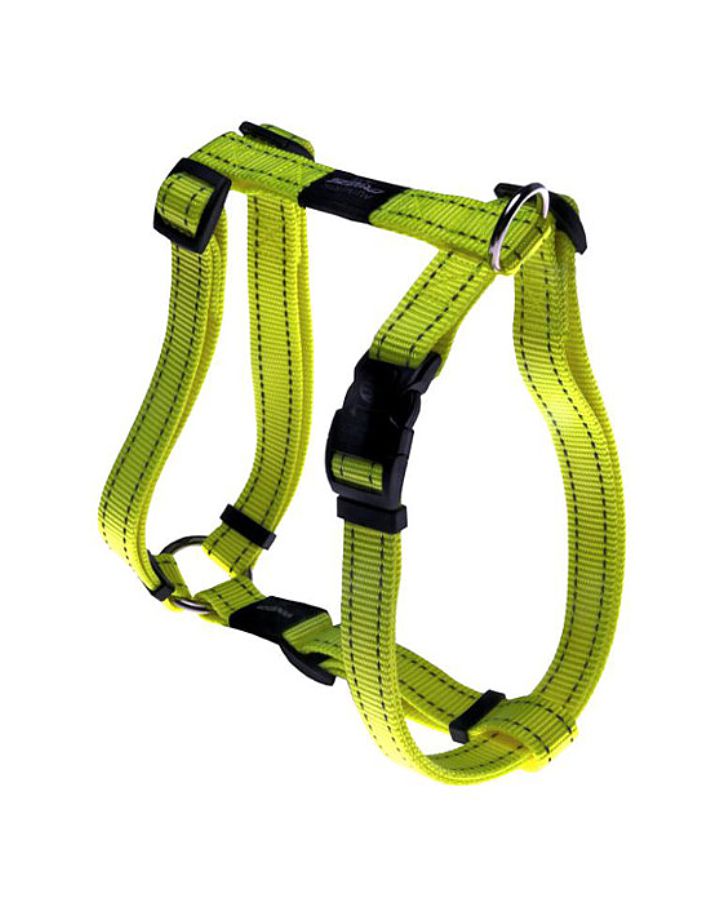
Our recommendation: one of three — for beginners we suggest starting with “an H-harness or step-in harness + a fixed lead”
Faced with 14 products, the question beginners ask most is “which ones do I actually buy?”. Based on BC Pets’ years of lead-fitting experience in the shop, our recommendations are as follows:
First choice (suits about 80% of beginners): ROGZ H-Harness or Step-in Harness ($108–$216) + ROGZ Fixed-Lead ($64–$120) + ROGZ SR Collar ($54–$184). The total comes to about $226–$520 and solves all three things at once — everyday tag-wearing, walking control and connection. For dogs that dislike having things put over their head, choose the step-in harness; otherwise the H-harness will do. This combination covers the real needs of the vast majority of Hong Kong family dogs, and is the package we most often put together for first-time dog owners.
Second choice (for a lunging problem): ROGZ Explore Harness two-point H-harness ($420–$630). It costs about three times as much as an H-harness, but if your dog really makes you brace hard on walks, the money is well spent — because it addresses the structural matter of the direction of force, not simply more restraint. Note that a two-point harness only works when the front clip is adjusted correctly, so when buying you can come to the shop and let us help fit it.
Third choice (which we don’t recommend beginners buy first): a half-check chained collar used on its own. The ROGZ Half-Check ($76–$108) is safe by design, with a limit on how far it tightens, but it is ultimately a tool that applies force to the neck. ROGZ also clearly recommends using a harness first for walks. Our position is: the half-check collar works well as an “auxiliary reminder” and to “prevent backing out and slipping the lead”, and is best used together with a harness rather than as the sole solution to a lunging problem. Some retailers will simply recommend a thicker neck chain to owners of lunging dogs, but we believe this poses a real risk to the dog’s neck vertebrae and windpipe and is not responsible advice.
Tip: BC Pets also carries a ROGZ cat harness range. Never put a dog collar on a cat: cat versions come with a safety-release buckle that pops open automatically if it snags — a lifesaving feature that dog versions don’t have.
Frequently asked questions (FAQ)
Which dog lead is best? Which type should a beginner buy first?
For a first-time buyer, we recommend a three-piece combination of “one collar + one harness + one lead”. The collar (such as the ROGZ SR Collar, $54–$184) is for everyday wear and holding the dog tag; the harness (H-type or step-in, $108–$216) is the mainstay for walking control, spreading the force from the neck across the chest and back; and for the lead, choose a 1.4–1.8 m fixed-length one ($64–$120). Don’t buy just a collar and use it for pulling on walks — over time it compresses the windpipe. Which harness to choose mainly depends on whether the dog resists having things put over its head: for dogs that dislike it, choose the step-in harness; otherwise the H-harness will do.
Where’s a good place to buy ROGZ leads in Hong Kong? Roughly how much do they cost?
BC Pets Pet Supplies Centre has a dedicated ROGZ leads and accessories section with 14 products, covering collars, half-check collars, H-harnesses, step-in harnesses, two-point harnesses and various leads, priced from HK$54 to HK$630. The shop is at Shop A8, G/F, Flora Plaza, 88 Pak Wo Road, Fanling, New Territories, where you can try them on in person; we also take online and phone orders, with free delivery across Hong Kong on orders over HK$350, and all goods are guaranteed to be genuine local-market Hong Kong goods. We suggest coming to the shop to measure the size on your first purchase; after that, you can re-order or change colour directly online.
What’s the difference between a collar and a harness? Can I buy just one?
Their roles are completely different. A collar’s main function is identification and holding the dog tag, with the force concentrated on the neck; a harness’s function is lead control, spreading the force across the chest and back. ROGZ clearly recommends using a harness rather than a collar for walks, because improper pulling on a collar may cause a choking sensation and even permanent damage to the windpipe. In practice you should have both: the collar for everyday wear (the law requires that a dog be identifiable), and the harness put on only when heading out. ROGZ also does not recommend keeping a harness on the dog continuously for long periods.
How do I measure my dog’s size accurately?
For a collar, measure the neck circumference (the thickest loop around the neck); for a harness, measure the chest girth (the widest loop around the ribcage, just behind the front legs), using a soft tape that sits against the body but doesn’t cinch. Once measured, check against the official size chart; if the figure falls where two sizes overlap, choose the larger size, because an adjustable strap can be taken in but not let out. After fastening, confirm with the “two-finger rule”: being able to lay two fingers flat inside means it fits; if they won’t go in it’s too tight, and if you can easily fit three or more fingers it’s too loose. Note that the range for the same size differs between styles — for example, the ROGZ M H-harness fits a 32–52 cm chest while the M step-in harness fits 42–61 cm — so you must re-measure and re-check when switching styles.
My dog lunges non-stop on walks — which lead should I switch to for it to help?
We suggest switching to a front-clip or two-point harness, such as the ROGZ Explore Harness two-point H-harness ($420–$630). The principle is that once the attachment point moves to the front of the chest, the moment the dog lunges forward its body is naturally drawn round to the side, physically cancelling out the lunge, rather than relying on the owner to haul against it. Conversely, switching to a thicker, tighter neck chain only intensifies the resistance and increases the risk of injury to the neck vertebrae and windpipe. But to be clear: a lead can only improve immediate control; genuinely solving lunging still requires loose-lead walking training alongside it — you can’t do without either.
What does Hong Kong law require regarding lead length?
Under Section 23 of the Rabies Ordinance (Cap. 421 of the Laws of Hong Kong), a keeper of a dog in a public place must lead it on a lead or otherwise keep it under proper control, with a maximum fine of HK$10,000 for offenders. The Agriculture, Fisheries and Conservation Department (AFCD) further requires that, in public places (country parks excepted), dogs weighing 20 kg or more must be securely led on a lead no longer than 2 metres. As for fighting dogs and known dangerous dogs, in public places they must wear a muzzle and a specified collar at all times, and be led on a lead no longer than 1.5 metres. When using an adjustable-length multipurpose lead, you must adjust it yourself to a compliant length.
Can I use a retractable lead (automatic reel lead)?
It is not recommended on ordinary streets and in shopping malls in Hong Kong. There are three reasons: firstly, when extended a retractable lead often exceeds the legal 2 m maximum (which applies to dogs of 20 kg or more); secondly, the cord is thin, hard to shorten and control instantly in a sudden situation, and can easily cut the hands; and thirdly, in crowded, narrow spaces it easily tangles around passers-by, bicycles or other dogs. Retractable leads are better suited to giving the dog more room to move in wide, uncrowded open country areas. For everyday walks in the city, a 1.4–1.8 m fixed-length lead is the safer, more practical choice.
Should I buy a puppy a size up to “leave room” when buying a lead?
No. A too-loose lead slips off very easily when a puppy struggles, backs up or gets startled, and is one of the common causes of dogs going missing. The right approach is to buy the size that fits now and re-measure every one to two months, replacing it as the puppy grows. Small dogs generally settle in size at around 8–12 months and medium-to-large dogs at around 12–18 months, and only then do you need to buy the “last one” in an adult size. During the puppy stage we suggest choosing more affordable basic styles (such as the ROGZ Fixed-Lead $64–$120 with a basic harness), and investing in higher-end styles once the dog has settled in size.
Limitations and disclaimer: The regulations cited in this article are based on the Rabies Ordinance (Cap. 421 of the Laws of Hong Kong) and the Agriculture, Fisheries and Conservation Department’s public information as at July 2026; the sizing data is taken from the product specifications published on the ROGZ official website; the prices are BC Pets’ online prices as at July 2026 and may vary by style, size, colour and limited-time offer — everything is subject to what is shown on the product page. Choosing a lead involves a dog’s individual build, health condition and behavioural traits; this article is general buying information and does not constitute veterinary or professional behaviour-training advice. If your dog has a history of neck, windpipe, intervertebral disc or skin-related conditions, please consult a registered vet before deciding which type of lead to use. Behavioural issues such as lunging and aggression should also be addressed with the help of a professional dog trainer — changing equipment alone may not be enough. If you find any data in this article to be wrong or out of date, please call +852 2683-0318 (daily 10:00–21:30) or WhatsApp +852 5544-7400 to let us know, and we will verify and update it.
Conclusion: the three core principles of choosing a lead
The whole guide can be distilled into three sentences:
- Keep the roles clear — don’t make one item do everything. The collar handles identification and tag-wearing, the harness handles walking control, and the lead handles the connection. Walking a dog on a collar with constant pulling over the long term is the mistake Hong Kong owners make most often and that harms dogs most.
- Look at behaviour, not breed. What decides which lead you should buy is the dog’s actual behaviour on walks: an H-harness or step-in harness for dogs that don’t pull, a half-check as backup for easily distracted dogs, and a front-clip two-point harness for lungers. Two dogs of the same breed can have completely different answers.
- Measure, don’t guess — and remember the 20 kg line. Use a soft tape to measure the neck and chest girth, and apply the two-finger rule after fastening. At the same time, remember Hong Kong law: in public places, dogs weighing 20 kg or more must use a lead no longer than 2 metres, while fighting and known dangerous dogs are limited to 1.5 metres and must wear a muzzle.
Choosing the right lead buys you not just a comfortable walk, but your dog’s spinal health, your own wrists, and walks that no longer feel like a daily tug of war.
Ready to switch your dog to a lead that actually fits?
BC Pets Pet Supplies Centre has been serving furry-friend families in Hong Kong since 2009, with its shop at Shop A8, G/F, Flora Plaza, 88 Pak Wo Road, Fanling, New Territories, where you can bring your dog in to try things on and have us help measure the size. All goods sold are guaranteed to be genuine local-market Hong Kong goods, with free delivery across Hong Kong on orders over HK$350, plus cash-voucher rebates.
Shop now: the full ROGZ leads and accessories range | all dog harnesses / collars / leads | pet outing supplies. Not sure about the size? Just call 2683-0318 or WhatsApp 5544-7400, tell us your dog’s weight, neck girth and chest girth, and we’ll match you with a suitable style.
Further reading: a list of 1,000 dog-friendly restaurants in Hong Kong and what to know about dining out with your dog | outing cleaning supplies | outing flea-control products | about BC Pets
Disclosure statement: This article was written by BC Pets Pet Supplies Centre (www.bcpets.com.hk). BC Pets is a Hong Kong pet-supplies and pet-food retailer, operating since 2009, and is a Hong Kong retailer of ROGZ products. To maintain the credibility of our content, our practice is: all regulatory data is based on the official publications of the Agriculture, Fisheries and Conservation Department and the Rabies Ordinance (Cap. 421 of the Laws of Hong Kong); the sizing and safety advice is drawn from public information on the ROGZ official website, including its official positions that “a harness, rather than a collar, should be used first for walks” and that it “does not recommend keeping a harness on continuously for long periods” — and even though the latter reduces accessory sales, we quote it faithfully. The article’s judgement that we “do not recommend beginners use a half-check collar on its own to solve lunging” is a professional opinion based on years of lead-fitting experience in the shop, and is not aimed at pushing the highest-priced products. This article does not constitute veterinary or professional dog-training advice.