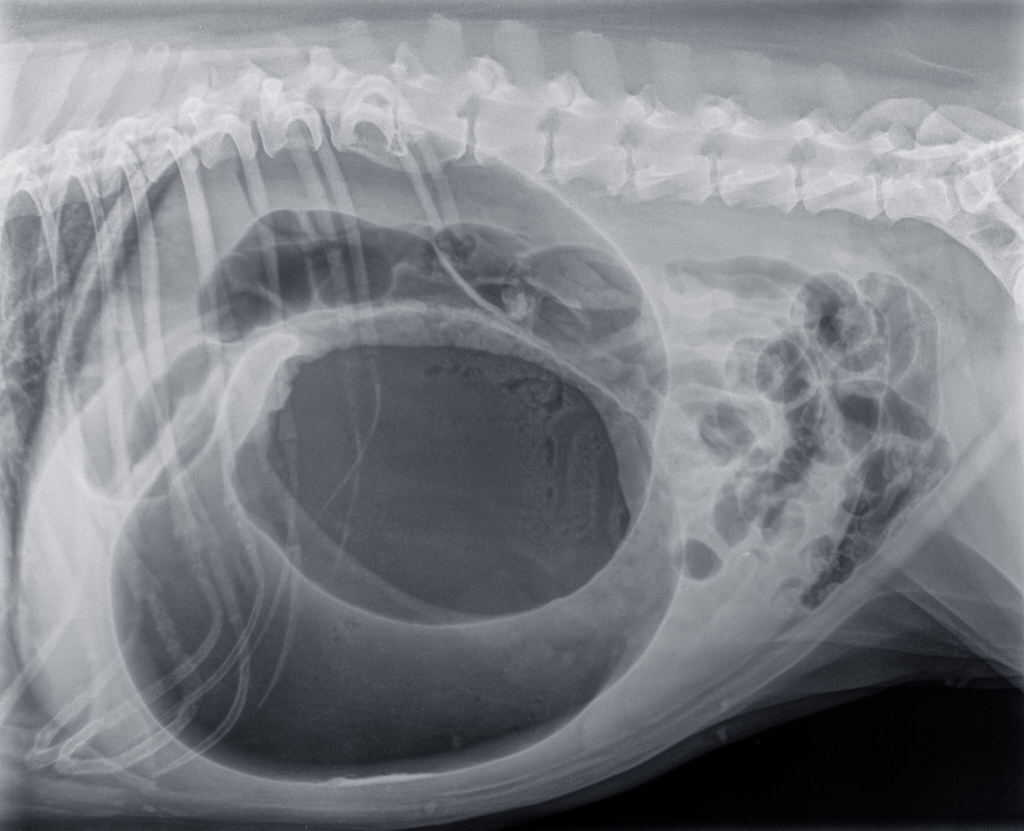
Gastric dilatation-volvulus in large dogs, also known as bloat and twisted stomach (Gastric Dilatation-Volvulus), is an emergency and life-threatening condition that mainly affects medium and large breeds. Put simply, the dog’s stomach suddenly fills with gas and swells up (possibly from swallowing too much air), and then the stomach twists 180 degrees or even 360 degrees, cutting off its blood supply and trapping other organs, causing tissue death inside the body that can kill within a very short time.
💥Why does GDV happen?
The causes are not fully understood, but the following factors carry a relatively high risk:
- Eating too fast or too much: finishing everything in one sitting, or wolfing food down, makes it easy to swallow a lot of air.
- Activity straight after eating: running or jumping about, for example, makes it easier for the stomach to shift position.
- Eating one large meal a day: not splitting food into several meals increases pressure on the stomach.
- Eating more dry food than wet food: dry food absorbs water and swells more easily.
- Anxious dogs: nervous, easily startled dogs swallow more air.
- Family history: certain breeds carry a higher genetic risk.
👀What symptoms should you look out for?
GDV is a condition that gets worse very quickly, so owners need to keep a sharp eye out:
- A swollen, bloated belly, especially the upper abdomen, which sounds like a drum when tapped
- Retching without bringing anything up
- Restlessness, constantly standing up and lying down, unable to get comfortable
- Rapid breathing
- Refusing to eat
- Lips or gums turning blue or white
- A racing heartbeat, or even shock
If you see any of this, do not wait. Get to a vet immediately!
🐕Which dogs are at higher risk?
The following breeds have a higher chance of developing GDV:
- German Shepherd
- Golden Retriever
- Labrador Retriever
- Great Dane 👉the most common
- Irish Wolfhound
- Saint Bernard
- Afghan Hound
- Standard Poodle
Dogs with a deep chest and large build are usually the most susceptible.
🏥How is it treated? Can it be cured?
If GDV is suspected, the vet will arrange the following immediately:
- Stabilising blood pressure and giving fluids to restore basic vital functions
- Passing a stomach tube or inserting a needle to release the gas, reducing pressure in the stomach
- Immediate surgery: turning the stomach back into its correct position, sometimes stitching the stomach in place (gastropexy) to stop it twisting again.
- If any tissue has died, part of the stomach or the spleen may need to be removed.
The success rate of surgery is not low, but if the dog is brought in late the mortality rate is very high.
✅How can you prevent it?
It cannot be avoided 100 percent, but you can reduce the risk:
- Split meals: feed two or more meals a day
- Avoid activity straight after eating: rest for at least 30 minutes before exercise
- Use an anti-gulping bowl (slow feeder bowl): to make your dog eat more slowly
- Avoid encouraging your dog to eat too fast: especially when several dogs are competing for food
- Consider preventive gastropexy surgery: particularly useful for high-risk breeds
- Watch its mood: try not to startle or stress it
🐾In summary
Gastric dilatation-volvulus is no small matter. It is a life-threatening emergency. Owners must be able to recognise the signs clearly, and those with high-risk breeds need to be especially careful about prevention. If you have any doubt, do not delay. Get to a vet straight away!