
As a devoted dog owner, you have probably seen fellow owners on Facebook or in your neighbourhood saying: “Start your dog on glucosamine early to protect the joints!” But when you look at your lively 2 or 3-year-old bouncing around the flat, you are bound to wonder: “Isn’t it too early at that age? When is the best time to start a dog on joint supplements?”
Homes in Hong Kong tend to be tall and narrow, and many are finished with polished tiles or wooden floors, so dogs charging around the flat are constantly slipping. Add in all the jumping on and off sofas and beds, and the strain on their joints is greater than you might imagine. This article breaks down the best time to start joint care for your dog, the ingredients that actually work, and how to pick the right joint supplement for your pet.
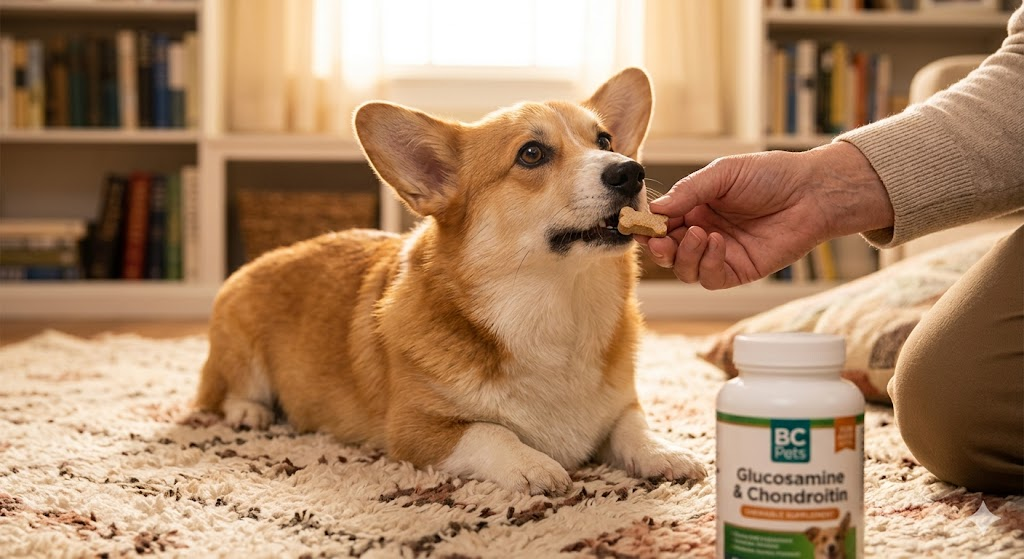
5-second summary: when should a dog start taking glucosamine?
The precise answer:
As a general rule, every dog should start supplementing with glucosamine by 7 years old (as it enters its senior years). However, if you have a large breed, a breed prone to joint problems (such as a Corgi, Dachshund or Golden Retriever), or a dog that has been injured before, you can start preventative supplementation from 1 to 2 years old, once it reaches adulthood.
Wear and tear on joint cartilage is irreversible. Rather than waiting until your dog is in pain, limping or struggling to stand up before trying to fix things, prevention is better than cure – that is the number one principle of protecting your dog’s joints.
These signs mean your dog’s joints are already crying for help
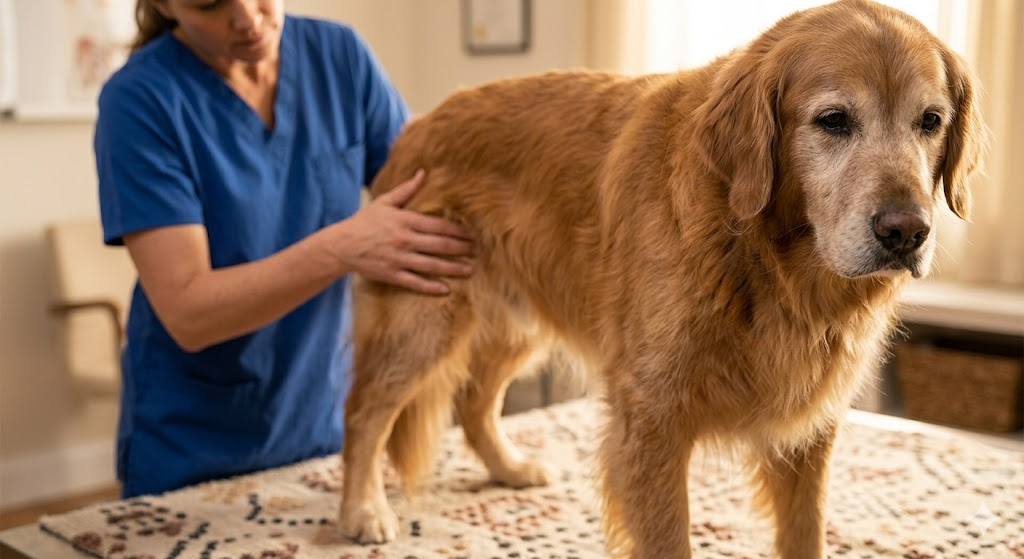
Dogs are remarkably adaptable and very good at putting up with pain, so by the time they clearly show discomfort, the joint deterioration is often already quite advanced. If your dog shows any of the following changes in behaviour, it is time to pay close attention:
- Much less willing to be active: a dog that used to dash to the door at the mention of a walk now seems listless and wants to sit down after a couple of steps.
- Struggling to get up: movements are slow and heavy when getting up, or your dog hesitates for a long time before jumping onto the sofa or bed – or even gives up and asks you to lift it.
- Odd walking posture: a “bunny hop” (both hind legs leaving the ground and hopping together), or a limping, unsteady gait.
- Constant licking of the joints: dogs lick their toes and joints repeatedly to relieve the dull ache caused by joint inflammation.
The 3 star ingredients for dog joint care
With so many dog joint supplements on the market, glucosamine alone may not be enough. Quality supplements usually use a combination formula to provide all-round protection:
1. Glucosamine & chondroitin
These two are the heavy hitters of joint care. Glucosamine promotes the regeneration of joint cartilage, while chondroitin acts like a sponge, locking moisture into the joint to maintain its elasticity and shock absorption.
2. Green Lipped Mussel
The most popular natural anti-inflammatory ingredient in Hong Kong in recent years. It is rich in Omega-3 fatty acids, ETA and polysaccharides, which effectively reduce the pain caused by joint inflammation – all naturally, and without upsetting your dog’s digestive system.
3. MSM (methylsulfonylmethane)
A natural organic sulphur compound whose main benefits are pain relief and reducing swelling. It can ease joint discomfort quickly and help your dog get its energy back.
At a glance: which type of joint care does your dog need?
| Dog’s condition / breed | Recommended starting age | Key focus of care | Recommended ingredients |
| Small and medium breeds / average adult dogs (e.g. Poodle, Pomeranian, mongrel) | 7 years or older | Everyday anti-ageing, maintaining cartilage elasticity | Glucosamine, chondroitin |
| Breeds at high risk of joint problems (e.g. Corgi, Dachshund, Shiba Inu) | 1 ~ 2 years old (after reaching adulthood) | Prevention aimed at inherited genetic weaknesses, protecting the long spine and hip joints | Glucosamine, chondroitin, MSM |
| Large breeds (e.g. Golden Retriever, Labrador, Husky) | 1 ~ 2 years old (after reaching adulthood) | Heavy body weight load, preventing canine hip dysplasia (CHD) | Glucosamine, high-concentration Omega-3 |
| Already has arthritis / just had surgery (any breed) | Start immediately | Actively reducing inflammation and pain, repairing damaged cartilage | Green Lipped Mussel, MSM, UC-II |
How can everyday habits double the results of joint care?
Besides feeding a joint supplement at set times each day, adjusting the home environment matters just as much:
- Keep weight strictly under control: obesity is the biggest killer of joints. Keeping your dog at a healthy shape directly reduces the vertical pressure carried by its four legs.
- Lay down non-slip mats: put non-slip mats or rugs in the living room and bedroom where your dog is most active, so it does not slip and suffer an acute fracture or dislocated joint.
- Cut out risky moves: as far as possible, avoid letting your dog stand up on its hind legs repeatedly, or jump straight down from a height.

Give your dog the very best joint care!
Do not wait until your dog can no longer walk, or even needs a wheelchair, before regretting that you did not start joint care sooner. Topping up quality joint nutrition early is the surest way to extend the years your dog can happily run and jump.
BC Pets has hand-picked a range of dog joint supplements that are bestsellers in Taiwan, the US and Japan for Hong Kong owners, with formulas containing high-purity glucosamine, Green Lipped Mussel and MSM to fully support your dog’s bone and joint health!
💡 Frequently Asked Questions (FAQ)
Q1: Can my dog take human glucosamine?
A: Please do not! Human supplements often contain aspartame (artificial sweetener), preservatives or sugar, and some even contain ingredients that are toxic to dogs (such as xylitol). On top of that, the dosage is calculated for human body weight, which is far higher, so feeding it carelessly can easily overload your dog’s liver and kidneys. Always choose a product made specifically for pets.
Q2: How long does a dog joint supplement take to work?
A: Supplements need time to build up. Glucosamine and chondroitin usually need to be given continuously for 4 to 6 weeks. Once enough has built up in your dog’s system, you will gradually see improved mobility and a lighter step – so the key is to keep at it every day.
Q3: Does glucosamine have side effects?
A: Generally speaking, glucosamine is safe and side effects are rare. A small number of dogs may have mild digestive upset (such as diarrhoea or vomiting), so giving it with a meal can help reduce discomfort.
Q4: How long before I see results from glucosamine?
A: It usually takes 4-8 weeks of continuous use before improvement starts to show, and long-term use works even better.
Q5: Can it be given together with other medication?
A: In most cases yes, but if your dog is taking anticoagulant medication, consult your vet first.
Q6: Can puppies take glucosamine?
A: Growing puppies generally do not need it, unless they are a large breed with a hereditary risk of joint problems – ask your vet first.
Q7: How should glucosamine be stored?
A: Keep it in a cool, dry place out of direct sunlight, and use it within 3 months of opening.