
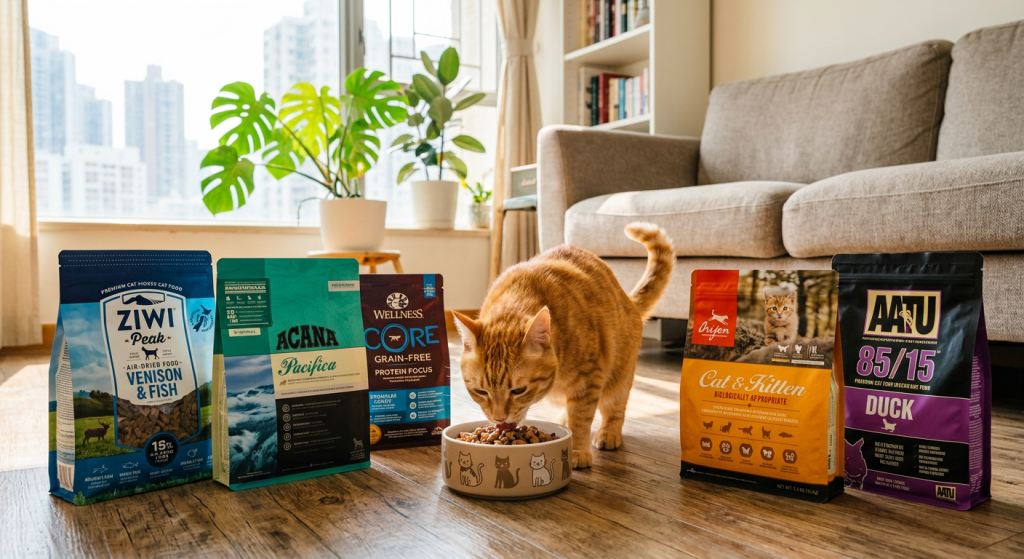
Quick answer:Which cat food is best? When choosing a quality cat food, note 5 key points—(1) meets the AAFCO or FEDIAF complete nutrition standard, (2) the first item on the ingredient list is a named meat, (3) protein no lower than 30% (cats need more than dogs), (4) must contain sufficient taurine (Taurine, an essential amino acid for cats), (5) buy genuine goods through authorised channels. Recommended brands in Hong Kong for 2026 include Orijen (40% protein), Ziwi Peak (96% meat), Wellness CORE, Fromm and Stella & Chewy’s.
Key Summary TL;DR
- Protein is king: cats are obligate carnivores; AAFCO requires adult cat food protein ≥26%, but quality cat food usually reaches 35-45%
- Taurine is essential: cats cannot synthesise enough taurine on their own; a deficiency can cause heart disease and retinal degeneration; AAFCO requires ≥0.1% in dry food
- Read the ingredients clearly: the first 3 items should be named meats (such as ‘deboned chicken’); avoid ‘meat by-products’ and artificial additives
- Top 10 brand recommendations: Orijen, Acana, Wellness CORE, Go! Solutions, Fromm, Oven-Baked Tradition, Ziwi Peak, K9 Natural, Stella & Chewy’s, AATU
- Hong Kong climate: average annual humidity 78%; finish dry food within 4-6 weeks after opening and store it in a sealed container
Cats are obligate carnivores, and their nutritional needs are completely different from dogs’—they need higher protein and must obtain cat-specific essential nutrients such as taurine and arachidonic acid from their food. This means cat food recommendations cannot simply apply the buying logic of dog food.
According to Hong Kong statistics, the city’s pet industry market has reached HK$6.2 billion, with cat ownership rising steadily in recent years. Faced with hundreds of cat foods on the market, many cat owners find ‘which cat food is best‘ a headache of a question.
This guide is written by the team at BC Pets Pet Supplies Centre (serving Hong Kong pet owners since 2009). Based on AAFCO nutrition standards and years of experience serving local cat owners, it sets out a cat food buying framework best suited to the Hong Kong environment.
Point 1: Understand AAFCO Cat Food Nutrition Standards
AAFCO (Association of American Feed Control Officials) sets two nutrition standards for cat food: Growth (kittens/pregnancy) and Maintenance (adult cats). The following are the key nutritional indicators for cat food:
| Nutritional Indicator | Adult Cat Minimum Requirement | Kitten Minimum Requirement | Quality Cat Food Range |
|---|---|---|---|
| Crude Protein | ≥26% | ≥30% | 35-45% |
| Crude Fat | ≥9% | ≥9% | 12-20% |
| Taurine (dry food) | ≥0.1% | ≥0.1% | 0.15-0.3% |
| Taurine (canned) | ≥0.2% | ≥0.2% | 0.2-0.4% |
| Crude Fibre | ≤5% | ≤5% | 2-4% |
| Moisture (dry food) | ≤10% | ≤10% | 6-10% |
*Data source: AAFCO official nutrition standards. European standards follow FEDIAF.
Key difference: the biggest difference between cat food and dog food is—(1) cats need higher protein (26% vs 18% for dogs); (2) cats must take in taurine (dogs can synthesise it themselves); (3) cats need arachidonic acid (Arachidonic Acid), which can only be obtained from animal fat. This is why you must never feed dog food to cats.
Point 2: Read the Ingredient List Clearly—Protein and Taurine
A cat food ingredient list is arranged by ingredient weight from high to low. As obligate carnivores, a cat’s ideal diet should have animal protein as the absolute lead.
Ingredient List Quick-Reference Comparison Table
| Ingredient Category | Quality ✓ | Avoid ✗ |
|---|---|---|
| Protein Source | Deboned chicken, fresh salmon, chicken meal (Chicken Meal), turkey | Meat by-products, poultry by-products, ‘meat’ (unnamed) |
| Fat Source | Chicken fat, salmon oil (with Omega-3), flaxseed oil | ‘Animal fat’ (source not stated) |
| Essential Nutrients | Taurine, arachidonic acid, vitamin A (preformed) | No taurine listed, only plant-based vitamin A precursors |
| Carbohydrates | Sweet potato, peas, brown rice (in moderation) | Corn gluten meal, soybean meal (high-proportion fillers) |
| Preservatives | Natural vitamin E (Mixed Tocopherols), rosemary extract | BHA, BHT, Ethoxyquin (chemical preservatives) |
Cat owners must know: unlike dogs, cats have limited ability to digest carbohydrates. Wild felines’ diets contain less than 5% carbohydrates. When choosing cat food, the lower the carbohydrate proportion the better—quality cat food is usually kept at 20-30% (calculation: 100% minus protein %, fat %, fibre %, ash %, moisture %).
Point 3: Choose the Right Formula by Age
A cat’s nutritional needs differ significantly at different life stages. Choosing the right formula is the foundation for ensuring your cat grows up healthy.
Kitten (0-12 months)
- Protein ≥30%
- Fat ≥9% (15%+ recommended)
- Contains DHA to support brain development
- High calcium to support bone growth
- Feed 3-4 times a day
Adult Cat (1-7 years)
- Protein ≥26%
- Fat 9-15%
- Balanced vitamins and minerals
- Control calories by body weight
- Feed 2 times a day
Senior Cat (7 years and above)
- Protein ≥30% (to maintain muscle)
- Easily digestible formula
- Contains glucosamine (joints)
- Urinary tract health formula
- Feed 2-3 times a day
Professional advice: a senior cat’s protein needs are actually higher than an adult cat’s, not lower—because a senior cat’s protein digestion and absorption rate declines, more protein is needed to maintain muscle mass. According to veterinary nutrition research, senior cat food protein should reach 30-45%. The old advice that ‘senior cats should have low protein’ has been rejected by most veterinary nutritionists (unless there is kidney disease requiring protein restriction).
Point 4: Dry Food vs Wet Food—How to Choose Best?
Dry food and wet food each have pros and cons; many vets recommend mixed feeding to gain the benefits of both:
| Comparison Item | Dry Food (Dry Food) | Wet Food / Canned (Wet Food) |
|---|---|---|
| Moisture Content | About 6-10% | About 75-80% |
| Protein Density | Higher (on a dry-matter basis) | Actual protein proportion appears lower due to high moisture |
| Storage Convenience | Convenient, longer shelf life | Needs refrigeration after opening, finish within 2 days |
| Dental Health | Chewing helps reduce tartar | Not much help for cleaning teeth |
| Water Intake | Need to ensure the cat drinks enough water | Naturally supplements water, lowers urinary tract risk |
| Suitable For | Healthy adult cats, multi-cat households | Cats that drink little, senior cats, cats with urinary tract problems |
| Daily Cost | Lower | Higher (can be paired with dry food to control cost) |
Mixed feeding advice: use dry food as the staple (about 70-80% of calories) and pair it with one wet-food meal a day (a staple can, i.e. a can marked as meeting AAFCO Complete and Balanced, not a complementary/treat can). This ensures balanced nutrition while increasing water intake. Watch the total calories—a typical 4-5kg adult cat needs about 200-250 kcal a day.
Point 5: Storage Tips in the Hong Kong Climate
Hong Kong’s average annual relative humidity reaches 78% (according to Hong Kong Observatory data), and often exceeds 90% in summer. Cats are extremely sensitive to food freshness; spoiled cat food will not only be refused but may also cause gastrointestinal problems.
5 key storage points: (1) Keep the original packaging—place the entire original packaging into a sealed container (the original bag has an anti-oxidation coating). (2) Store in a cool place—avoid direct sunlight and keep away from the stove. (3) Finish within 4-6 weeks after opening—beyond this time nutrient loss accelerates. (4) Refrigerate wet food after opening—finish within 2 days, and seal the remainder with a fresh-keeping lid in the fridge. (5) Check regularly—discard immediately if you find an off odour, clumping or discolouration.
Buying advice: Hong Kong cat owners may consider buying smaller packs (such as 1.8kg/2.7kg) to ensure they finish within the best-before period. Single-cat households are especially advised to choose small packs; although the unit price per kilogram is slightly higher, it ensures the cat gets fresh food at every meal.
Top 10 Natural Cat Food Brands Comparison Table
The following 10 recommended cat food brands are natural, quality brands selected by BC Pets, all genuine local-market goods and meeting AAFCO or FEDIAF standards. The comparison covers protein content, key features, reference price and the most suitable type of cat:
| Brand | Origin | Protein | Key Features | HK$ Reference Price/kg | Best For |
|---|---|---|---|---|---|
| Orijen | Canada | 40% | 90% animal ingredients, WholePrey formula with organs and cartilage | $170-200 | Cat owners seeking the highest protein |
| Acana | Canada | 33-37% | Made by Champion Petfoods, 75% animal sources, meat-rich formula | $120-140 | Value-for-money choice |
| Wellness CORE | United States | 38-45% | Grain-free high protein, indoor cat / weight management / digestion range | $130-150 | Indoor cats and those needing weight control |
| Go! Solutions / Now Fresh | Canada | 34-46% | Made by Petcurean, 3 main ranges: skin + digestion + weight | $100-130 | Cats with sensitive stomachs |
| Fromm | United States | 30-34% | Family-run for over 120 years, small-batch handcrafted, stable formula | $100-130 | Sensitive stomachs, needing a stable formula |
| Oven-Baked Tradition | Canada | 28-32% | Low-temperature slow-baking process retains nutrients, 75% animal protein, multiple flavour options (chicken/duck/red meat/fish) | $110-170 | Picky cats, seeking palatability |
| AATU | United Kingdom | 35-40% | 80% animal ingredients, single-protein range, no grains/potatoes | $130-160 | Cats with food allergies |
| Ziwi Peak | New Zealand | 36-45% | Air-dried process (Air-Dried), 96% meat content, close to raw food | $300-380 | Seeking top-tier natural food |
| K9 Natural (Feline Natural) | New Zealand | 40-50% | Freeze-dried raw food (Freeze-Dried Raw), 99% meat and organs | $280-350 | Supporters of the raw-food philosophy |
| Stella & Chewy’s | United States | 40-45% | Freeze-dried raw meat coated kibble (Raw Coated), balancing raw food and convenience | $200-280 | Those wanting to try raw food but wary of the hassle |
*Prices are BC Pets’ reference prices as of April 2026; actual prices vary by pack size and offers. All brands are genuine local-market goods.
BC Pets recommends: we most recommend the following three cat foods—Fromm has a stable formula and excellent stomach adaptability, making it very suitable for first-time cat owners, and it is reasonably priced. Wellness CORE‘s indoor cat formula is designed specifically for the indoor keeping environment common in Hong Kong, controlling calories while maintaining high protein. If your budget allows and you want to give your cat the best, Ziwi Peak‘s air-dried cat food is made with 96% New Zealand meat and has an extremely high nutrient density, making it the dry food choice closest to a natural diet on the market.
Frequently asked questions (FAQ)
Q: Which cat food is best? What is recommended for 2026?
Recommended quality natural cat food brands for 2026 include: Orijen (40% protein, 90% animal ingredients), Ziwi Peak (96% meat, air-dried process), Acana (75% animal sources), Wellness CORE (grain-free high protein) and Fromm (family-run for 120 years, stable formula). When buying, note AAFCO certification, that the first item on the ingredient list is a named meat, protein no lower than 30%, and that it contains sufficient taurine.
Q: How should I read the cat food ingredient list?
A cat food ingredient list is arranged by weight from high to low. The first 3 items of a quality cat food should be named animal proteins (such as ‘deboned chicken’, ‘fresh salmon’); avoid products that list corn, wheat or ‘meat by-products’ first. Important nutritional indicators: crude protein should reach 30% or above (kittens need more), crude fat 9-20%, and taurine content no lower than 0.1%. Avoid cat food containing BHA, BHT artificial preservatives and artificial colours.
Q: What food should kittens, adult cats and senior cats eat?
Kittens (0-12 months) need high protein (over 30%), high fat, high calcium and DHA-containing formulas to support rapid growth; adult cats (1-7 years) should choose a balanced formula with protein over 26% and watch calories to avoid obesity; senior cats (7 years and above) are advised to choose easily digestible formulas containing joint-care ingredients (glucosamine) and urinary tract health formulas. Some brands such as Orijen and Acana offer ‘All Life Stages’ formulas.
Q: Must cat food contain taurine?
Yes. Taurine (Taurine) is an essential amino acid for cats; cats cannot synthesise enough taurine on their own and must obtain it from food. AAFCO standards require taurine content in dry food no lower than 0.1% and in canned food no lower than 0.2%. Long-term taurine deficiency can cause dilated cardiomyopathy (DCM) and central retinal degeneration, and in severe cases can lead to blindness and heart failure. All quality cat food formulas ensure sufficient taurine is added.
Q: How should I choose between dry food and wet food? Can I feed them mixed?
Dry food is convenient to store and helps clean teeth, but has low moisture content (about 10%); wet food is high in moisture (about 75-80%), helping cats take in water and lowering the risk of urinary tract disease. Many vets and nutritionists recommend mixed feeding—using dry food as the staple and pairing it daily with an appropriate amount of wet food (a staple can rather than a complementary can), which ensures balanced nutrition while increasing water intake. When feeding mixed, watch the total calories to avoid becoming overweight.
Q: How should cat food be stored in Hong Kong’s humid weather?
Hong Kong’s average annual relative humidity reaches 78%. After opening dry food, it is recommended to: (1) place the original packaging into a sealed container (do not pour it out, as the original bag has an anti-oxidation coating); (2) store in a cool, dry place and avoid direct sunlight; (3) finish within 4-6 weeks after opening; (4) using a vacuum-sealed bag can extend this by 1-2 weeks. Discard immediately if the food develops an off odour, clumping or discolouration. Cats are very sensitive to food freshness, and spoiled food may be refused or cause gastrointestinal problems.
Q: Is grain-free cat food good?
Grain-free cat food uses sweet potato, peas and the like instead of grains as the carbohydrate source, and protein content is usually higher. For cats allergic to grains or with sensitive digestion, a grain-free formula is a good choice. But not all cats need grain-free food—healthy, allergy-free cats are equally well balanced eating formulas containing quality grains (such as brown rice, oats). It is worth noting that the US FDA once investigated a potential link between grain-free pet food and heart disease (DCM), but as of 2024 was unable to confirm a causal relationship and the investigation has been closed. Choose based on your cat’s individual needs.
Disclaimer: this guide is written based on the BC Pets team’s years of industry experience, AAFCO’s publicly available nutrition standards and publicly available nutrition information; brand comparisons are based on April 2026 data. Every cat’s nutritional needs vary by breed, body size and health condition; if there are special dietary needs (such as prescription food or kidney-disease food), please consult a registered veterinarian first. Prices and product availability may change. If you find any information to be incorrect, please feel free to contact us at [email protected] to correct it.
Conclusion
The core principles for choosing food for your cat: protein is king, taurine is essential, ingredients must be transparent. Remember the three most important checkpoints: the packaging states AAFCO/FEDIAF certification, the first item on the ingredient list is a named animal protein, and protein is no lower than 30% and contains taurine. Combined with correct storage and a gradual food transition, you can provide your furry child with a safe, balanced diet.
To learn more detailed information about choosing food, see our Hong Kong Pet Food Buying Guide and WDJ 2026 Recommended Dog Food List.
Browse the BC Pets Natural Cat Food Range
Full genuine local-market goods guarantee · Free delivery on orders over $350 · Fanling store self-pickupShop cat food →