Before buying dog food, have you ever stared at a pile of English dog-food labels with no idea what you are actually buying? They all say “high protein” and “healthy formula”, but what do crude protein and crude fat really mean, and what exactly is the AAFCO dog-food standard? If you cannot read them, it is genuinely hard to know whether you are buying the right dog food.
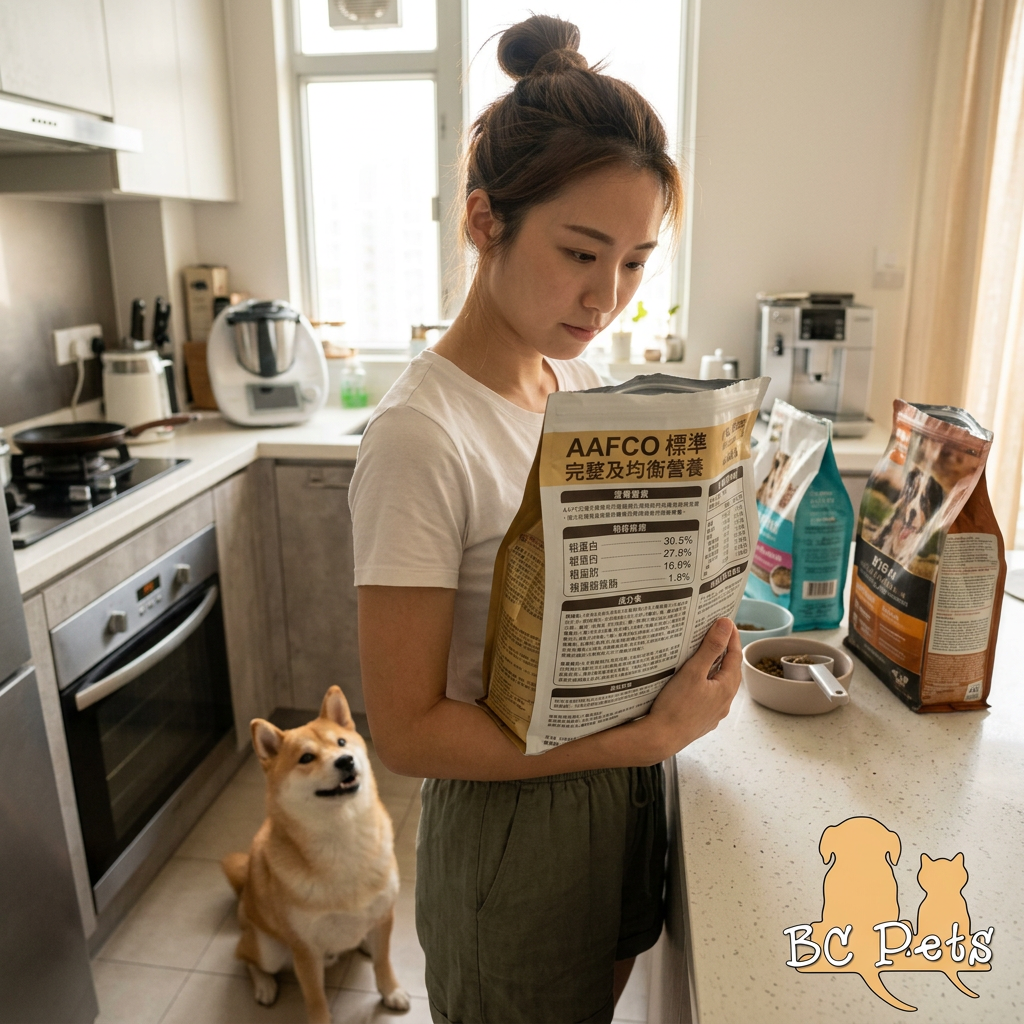
This article is written for first-time pet owners and dog owners. It walks you through breaking down dog-food nutrition step by step — especially AAFCO standards, crude protein and crude fat — so that next time you buy dog food you can quickly use the label to filter out unsuitable products and pick one that truly suits your own dog’s constitution.
Once you grasp a few key points, you can easily understand “what the AAFCO dog-food standard is”, tell the difference between high-protein and low-fat dog foods, and even make simple comparisons between different dog-food brands — no more guessing.
Why must you read the dog-food label before buying?
Many owners buy dog food based only on price, packaging and word of mouth, but the most objective basis is actually the nutrition label and ingredient list on the back of the pack. These include crude protein, crude fat, calories, mineral ratios and more — all of which directly affect your dog’s weight, muscle, coat and organ health.
If you buy dog food just because “a lot of people seem to use it”, you may end up feeding your dog a formula unsuited to its age or activity level, and it may take in too much fat or salt over the long term, gradually leading to obesity and strain on the heart and kidneys. That is why learning to read dog-food labels is essential for every Hong Kong dog owner who wants to buy responsibly.
What is the AAFCO dog-food standard, and how do you find it on the label?
AAFCO stands for the Association of American Feed Control Officials. Put simply, it is an authoritative body that sets “minimum nutritional standards” for dogs and cats, listing the lower limits of protein, fat, vitamins and minerals needed at different life stages. As long as a formula meets these nutritional requirements, the manufacturer can state “meets AAFCO dog-food standards” on the packaging.
On the dog-food label you can look for a sentence called the “Nutritional Adequacy Statement”, for example: “This product is formulated to meet the AAFCO dog-food nutritional standards for maintenance of adult dogs, providing complete and balanced nutrition.” This means it meets the minimum nutrition required for adult dogs and is a complete food that can be fed on its own long term.
However, note that AAFCO only sets a “minimum threshold”, and it does not mean every food meeting the standard is high quality or completely safe — upper limits are not listed for everything, such as salt and sugar — so owners still need to assess it together with the ingredient list and brand information. To save time choosing food, head straight to BC Pets’ curated Hong Kong AAFCO-certified dog food recommendations section and start with products that already pass the standard before narrowing down —
👉 View products now: <https://www.bcpets.com.hk/shop/product-category/dog-food/>
How much crude protein is right for your dog?
Crude Protein is one of the first numbers to look at in dog-food nutrition. According to AAFCO guidelines, adult dogs at maintenance need a minimum of about 18% crude protein, while growing puppies and pregnant/lactating bitches need at least 22.5% (on a dry-matter basis).
But when actually buying dog food, just hitting the “minimum” is usually not ideal. For a typical indoor adult dog with moderate activity, consider around 20–25% crude protein; for working dogs or those with very high activity, you can choose a 25–30% high-protein formula to help maintain muscle and stamina. For senior dogs or those with kidney problems, it is not advisable to experiment with very high-protein dog foods — consult your vet first.
Many people love natural foods. If that is you too, ask yourself one question: “How do you choose the crude protein and crude fat ratio in natural dog food?” The principle is: fresh meat or meat meal clearly listed among the first few ingredients, paired with a moderate fat ratio, usually suits the average Hong Kong family dog.
How do you read crude fat? Is lower always better?
Fat is one of a dog’s main energy sources; it also helps absorb fat-soluble vitamins and keeps the coat glossy, so it cannot be avoided entirely. AAFCO recommends adult maintenance dry food contain at least about 5.5% crude fat, and at least 8.5% for puppies and pregnant/lactating dogs.
When actually choosing food, 10–15% crude fat is fairly average for a generally healthy adult dog; highly active, very lean dogs can eat slightly higher fat; while obese, sedentary dogs or those with a history of pancreatitis should choose a lower-fat formula and control calories under a vet’s guidance. Remember to check the fat source — chicken fat, fish oil, flaxseed oil and so on all provide beneficial Omega fatty acids, good for skin and coat health.
What is the difference between high-protein and low-fat dog food, and which is right for you?
High-protein dog food usually targets dogs that need to maintain a lot of muscle or have high activity levels; its benefits are helping repair tissue, maintain muscle and increase satiety. But if the calories are too high or the dog has poor kidney function, eating too much of it long term may not be suitable.
Low-fat dog food is mostly used for weight loss, a history of pancreatitis, or middle-aged and senior dogs, controlling total calories by lowering the fat ratio to reduce weight and pancreatic strain. But if the protein and fibre ratios are poorly balanced, the dog may feel hungry all the time and its coat may deteriorate, so you cannot buy on the words “low fat” alone. Ideally, balance high protein with moderate fat according to your dog’s weight, condition and activity level, rather than chasing extremes.
In practice: how do you use the label to pick the right dog-food brand?
When you pick up a bag of dog food, you can run through the following 5 steps:
- First find the AAFCO statement: confirm it is a complete food and that it states it is suitable for adult / puppy / all life stages, as a basic screen.
- Look at the crude protein figure: around 20–25% for adult dogs, over 22.5% for puppies; then fine-tune by your dog’s activity level and health.
- Look at the crude fat ratio: generally 10–15% for adult dogs; those needing to lose weight or with past pancreatic problems can choose lower fat, but best to ask your vet first.
- Check the ingredient-list order: are the first few clearly labelled as chicken, fish, lamb and so on, rather than lots of grain by-products? Natural foods tend to use fewer artificial additives and by-products.
- Only compare price and brand last: among the several dog-food brands that meet the nutritional criteria, then compare price, reputation, origin and brand transparency, and pick a long-term staple food that both you and your dog are comfortable with.
If you want to see the crude protein, crude fat ratios and ingredients of different formulas all at once, go straight to the BC Pets dog-food category page, filter by brand, age and function, then check against the dog-food label using the 5 steps above:
👉 View products now: <https://www.bcpets.com.hk/shop/product-category/dog-food/>
Next step: use the right knowledge to pick a lifelong good food for your dog
Knowing how to read dog-food labels and understanding AAFCO dog-food standards and crude protein and crude fat ratios is like having an “anti-scam compass for buying dog food”: it helps you quickly filter out unsuitable products from the many choices and focus on picking a staple food that truly fits your furry friend.
If you are still unsure which formula best suits your dog, start by picking a few favourites on the BC Pets website, then check with our team or bring the nutrition label to your vet, and adjust step by step.