
As soon as summer arrives, plenty of people take their dogs out to play, whether that is splashing about at the beach, having a picnic in the park, or just running around on the grass. It is all great fun. But in such hot weather, it can actually be very dangerous for dogs!
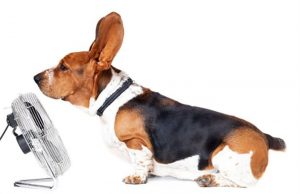
We can put on light clothes and switch on the air conditioning to cool down, but dogs cannot take their coat off, and once their body temperature rises things can go wrong quickly. So as a dog owner, it really matters to understand what weather is too hot for your dog and to be able to tell when the heat is making it unwell.
😥 Heat exhaustion (heatstroke) can be fatal. This is no joke!
The biggest risk in summer is heat exhaustion. If it is not dealt with immediately, in severe cases it can be fatal. So taking full sun and heat precautions really cannot be overlooked.
🌡 How much heat can a dog take?
Just like people, dogs can gradually acclimatise to hot weather, but once the temperature reaches around 25 degrees Celsius or above, you need to start being careful.
Asphalt roads and pavements in particular can be a full 40 to 60 degrees hotter than the air! In direct sunlight with no wind and low humidity, the pads on your dog’s feet can be burned after just 60 seconds of walking!
If the outside temperature is higher than a dog’s own body temperature (about 38 to 39 degrees Celsius), it can suffer heatstroke even in the shade. If humidity is high, it is even harder for a dog to cool down by panting, so the risk of overheating is higher still.
Generally speaking, once the temperature reaches 27 to 32 degrees Celsius, combined with high humidity, direct sun or exercise, a dog will struggle very quickly.
📌 Tip: if you already find the heat unbearable yourself, your dog is definitely having an even harder time!
👀 How can you tell your dog is overheating?
There is no hard and fast rule about which temperature counts as too hot, so the most important thing is being able to spot the signs of heatstroke in your dog:
- Excessive panting
- Drooling heavily
- Lethargy
- Vomiting or diarrhoea
- Drinking more water than usual
- Gums and tongue turning bright red
In more serious cases, the dog may be unsteady on its feet, collapse, faint or even have seizures. If you see any of this, get to a vet immediately!
✅ What can you do day to day?
Give plenty of water, find a shady spot to rest, and stay out of direct sunlight as much as possible. Not sure whether your dog has a fever? Use a digital thermometer to take its rectal temperature. If it is above 40 degrees Celsius, start cooling it down and get to a vet immediately!
📋 Which dogs are most prone to heatstroke?
A dog’s size is not the biggest factor. Instead, the following types of dog need extra care:
- Overweight dogs
- Puppies and senior dogs
- Short-nosed breeds (such as French Bulldogs and Pugs)
- Dogs with thick, heavy coats (such as Huskies)
In short, these dogs are especially sensitive to high temperatures, so be extra vigilant when taking them out.
🔚 In summary
When you go out in summer, do not just think about your own fun, look after your dog too! Remember to:
- Avoid taking your dog out during the hottest hours around midday
- Touch the asphalt with your hand to check how hot it is before walking on it
- Find a shady spot for your dog to rest
- Bring water so your dog can drink whenever it needs to
- Use a damp towel to cool your dog down if needed
Do all that and your dog can enjoy the summer safely and happily 🐾☀️