Hong Kong’s Agriculture, Fisheries and Conservation Department (AFCD) officially published the 《Pet Food Safety Guidelines》 in June 2026, offering advice for pet food manufacturers and traders as well as for pet owners. For Hong Kong cat and dog owners, these guidelines are like an official textbook on “choosing, buying and storing food”. BC Pets breaks down the key points and adds practical tips, so your furry friends can eat safely and stay healthy.
1. What counts as a “safe” pet food?
According to the guidelines, a safe pet food should be of good and consistent quality, and is generally cooked or heated to a high enough temperature to kill bacteria and prevent pet food poisoning. If it is a staple food, it must also be able to provide all the nutrients your pet needs.
👉 When buying a staple food, check whether the packaging is labelled “Complete & Balanced” or similar wording; this is an important indicator that the staple food meets nutritional requirements.
2. Dry food, wet food, fresh food, raw food — how do they differ?
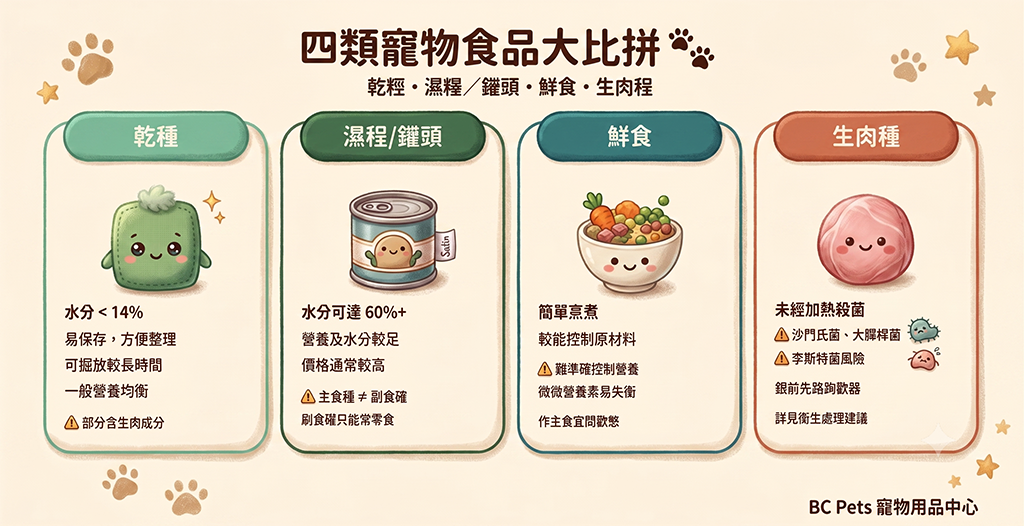
There is a huge variety of pet foods on the market. Using cats and dogs as examples, the guidelines briefly introduce the characteristics of each type:
- Dry food: Cooked, shaped and then dried, usually with a moisture content below 14%. Easy to store, convenient and can be kept for a fairly long time; it generally provides balanced nutrition.
- Canned/wet food: Vacuum-sealed and heat-treated, with moisture content that can reach 60% or more, offering more nutrition and moisture; the price is usually higher than dry food.
⚠️ Complete canned food vs complementary can: A complete canned food must meet nutritional standards and be complete and balanced, so it can be fed long term as a staple food; a complementary can (treat can) can only be used as a snack, and feeding it as a staple food will leave your pet with an unbalanced diet and make it ill. - Fresh food: Made from simply cooked meat, vegetables and fruit, often homemade by owners, giving better control over the raw ingredients; however, it is harder to control the nutritional ratios precisely (especially micronutrients such as vitamins). If you want to use fresh food as a staple, it is best to consult a vet or a veterinary nutrition specialist to design a meal plan.
- Raw food: Contains raw meat ingredients (some dry foods are also coated with or mixed with raw meat) and is classified as “raw pet food”; see Section 7 below for precautions.
3. How to choose? Look for the brand, certifications and life stage
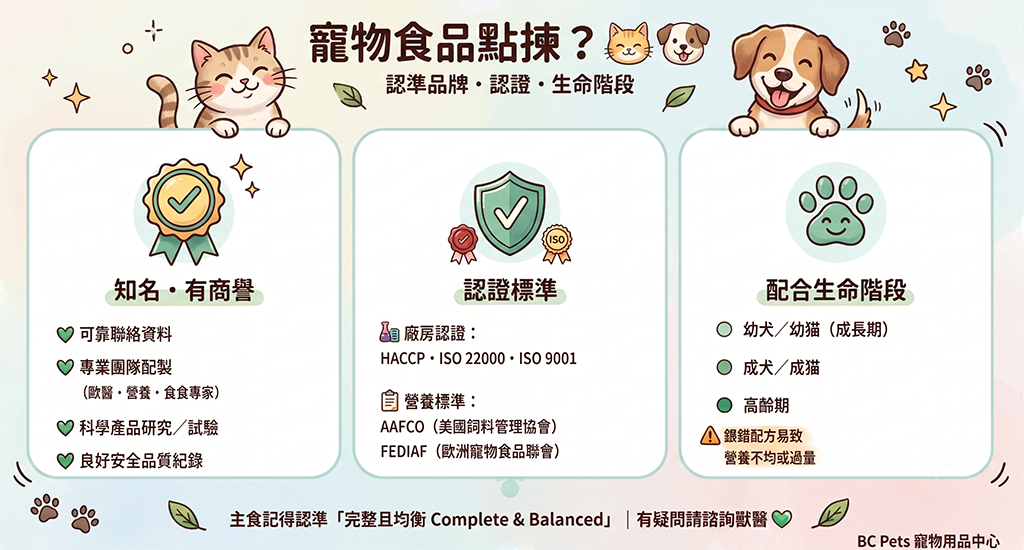
The guidelines recommend choosing a well-known, reputable and certified brand, and giving priority to manufacturers that can provide the following information:
- have reliable contact details;
- the food is formulated by a professional team (which may include vets, animal nutritionists and food safety experts);
- have carried out scientific product research or trials;
- the manufacturing plant holds professional certifications, such as HACCP, ISO 22000, ISO 9001.
Match the life stage: choose the right formula according to your pet’s age — growth stage (puppy/kitten), adult dog/adult cat, senior, and so on. Feeding an unsuitable formula long term (for example, feeding puppy food to an adult dog) can lead to nutritional imbalance or excess.
Meet nutritional standards: when choosing a staple food for cats and dogs, we recommend choosing products that meet the standards of international bodies, such as the Association of American Feed Control Officials (AAFCO) or the European Pet Food Industry Federation (FEDIAF), or the nutritional standards adopted by the regulatory authority of the country of origin. If in doubt, please consult your vet.
4. Where should you buy to be safe and reliable?
The guidelines clearly recommend: buy pet food from reputable and reliable places, such as a pet shop you are familiar with, official websites, authorised distributors or retailers, Hong Kong genuine local-market goods suppliers, and veterinary clinics, and avoid buying from online platforms or sales channels of unknown origin. At the same time you should:
- only buy products in good condition; do not buy if the packaging is dented, torn, punctured or discoloured;
- before buying, read the packaging information to confirm it is suitable for your pet (breed, applicable stage), and check the shelf life (“Use By” / “Best Before” / “Best Before”);
- avoid over-buying, to prevent the food from spoiling before it is used up.
🐾 BC Pets has always met the requirements of the guidelines
Supplying safe and premium pet food to Hong Kong pet owners has always been the mission of BC Pets. We are exactly the kind of “reputable and reliable retailer” described in the guidelines:
- Guaranteed Hong Kong genuine local-market goods — we sell only genuine products, with a clear and reliable source, so you never have to worry about goods of unknown origin;
- Carefully selected well-known certified brands — our natural foods and complete canned foods all come from brands that meet nutritional standards (AAFCO/FEDIAF) and hold plant certifications;
- we provide complete product information, making it easy for you to choose according to your pet’s life stage and needs;
- one-stop service across our shop, online store and phone ordering, with free delivery across Hong Kong on orders over HK$350.
Shop safe, premium food at BC Pets now:
🐶 Natural Dog Food
🐱 Natural Cat Food
5. Correct use, handling and storage
Use and handling
- Read the label carefully: ingredients, nutritional composition, weight, manufacturing date and shelf life, manufacturer details, storage/use instructions, and so on; provide the appropriate portion and feeding frequency according to the feeding instructions or your vet’s advice.
- Wash your hands: wash your hands thoroughly before and after handling pet food.
- Dedicated utensils: do not share utensils with your pet; use a dedicated, clean spoon/measuring cup to scoop the food, and wash it with soap and clean water and wipe it dry after each use.
- Switch food gradually: switching food suddenly can easily cause vomiting and diarrhoea. We recommend a 7-day transition —
Days 1–2: 75% old food / 25% new food
Days 3–4: 50% each
Days 5–6: 25% old food / 75% new food
Day 7: 100% new food.
Storage
- Follow the manufacturer’s storage instructions; generally keep the food in a cool, dry, well-ventilated place, away from high temperatures, direct sunlight and high humidity.
- Keep chilled products at 0 to 4 degrees Celsius; keep frozen products at -18 degrees Celsius or below.
- As far as possible, put dry food together with its original packaging into a sealed container, so the information is easy to check later (for example, in case of a recall); finish it as soon as possible after opening.
- Never leave opened wet food/canned food at room temperature for long periods; any leftover should be refrigerated immediately or discarded.
6. What to do if the food shows something abnormal?
If the food has an off smell, discolouration, mould or abnormal texture, or the packaging is damaged, please stop using it immediately. Keep the receipt or proof of purchase; if the product is recalled or a quality problem is found, stop using it and contact the trader to follow up.
7. Special precautions for raw food
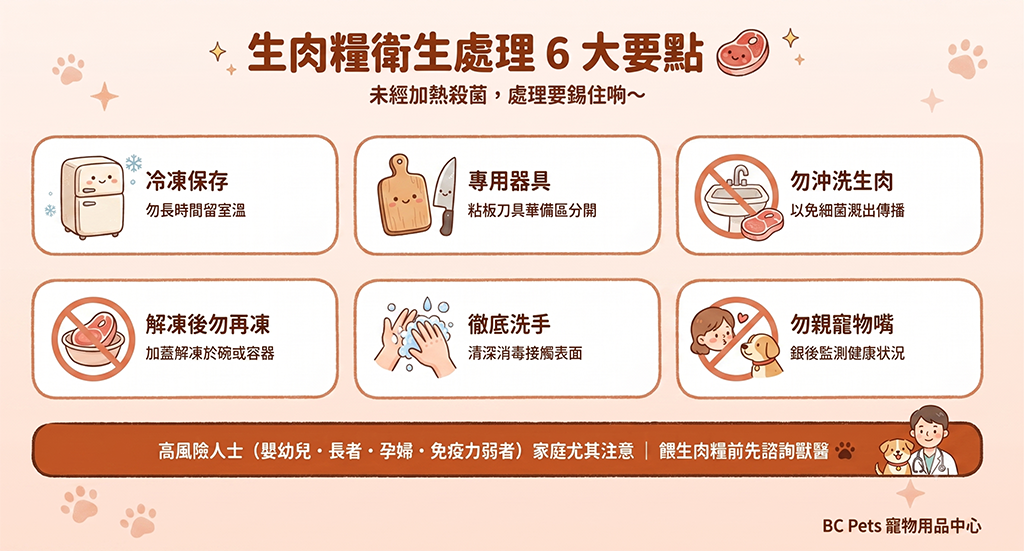
Raw pet food consists mainly of uncooked meat, bones and offal, and has only been quick-frozen or freeze-dried. Because it has not been heat-treated to kill bacteria, take special care with the following:
- Bacterial risk: it easily carries Salmonella, E. coli and Listeria, posing a higher contamination risk to pets and to high-risk people in the household (infants, the elderly, pregnant women and those with weak immunity).
- Consult your vet first: before considering raw food, ask your vet to assess the risks; unless directed by your vet, avoid feeding it to puppies/kittens, or to elderly, pregnant or immunocompromised pets.
- Avian influenza note: according to advice from the World Organisation for Animal Health, the virus may be transmitted to cats, so you should avoid feeding raw poultry products to cats, especially those from areas with an avian influenza outbreak.
- Hygienic handling: do not leave raw food at room temperature for long periods; use a dedicated chopping board, knife and preparation area; thoroughly clean and disinfect any surfaces and utensils that have been in contact with it; do not rinse raw meat (to avoid splashing bacteria); do not re-freeze after thawing; wash your hands thoroughly after handling.
- Interaction hygiene: after your pet eats raw food, avoid kissing its mouth or letting it lick your face; monitor its health closely, and if it shows vomiting, diarrhoea or loss of appetite, seek veterinary help early.
8. BC Pets’ 5 tips for Hong Kong cat and dog owners
- Look for the “Complete & Balanced” label when choosing a staple food, and tell complete canned food apart from treat cans.
- Choose certified brands (HACCP/ISO, AAFCO/FEDIAF standards) that match your pet’s life stage.
- Buy genuine local-market goods from reliable retailers, check that the packaging is intact, note the shelf life, and avoid channels of unknown origin.
- Store it properly: keep dry food sealed and moisture-free, refrigerate wet food as soon as it is opened, and follow the temperature requirements.
- Switch food gradually, watch for anything abnormal, stop using it immediately and keep the receipt.
Eat safely, and your furry friends will stay healthy
This AFCD guideline aligns perfectly with the mission BC Pets has always held — to supply safe and premium pet food to Hong Kong pet owners. From choosing food and buying it to storing it, doing every step well is the most tangible way to care for your furry friends.
🐾 Shop safe, premium food now: Natural Dog Food | Natural Cat Food | BC Pets Pet Supplies Centre (free delivery across Hong Kong on orders over HK$350 · genuine goods guaranteed)
👉 Further reading: Buying cat and dog food in Hong Kong: genuine local-market goods vs parallel imports vs mainland online shopping (Taobao/Pinduoduo) — which is best?
Source: Agriculture, Fisheries and Conservation Department, Pet Food Safety Guidelines (Pet Owners) and summary version, June 2026. This article is for general reference only; for the dietary needs of individual pets, consult your vet.